
Cricket Run-Up Construction in Pakistan: Case Study from Valencia Town, Lahore
Bare patches, deep foot-holes and mud in the bowlers’ run-up are among the most common problems at cricket academies, clubs and grounds across Pakistan. A failing run-up spoils the look of the outfield and gives fast bowlers uneven footing. This case study shows how Liberal Lawn Mowers built a permanent cricket run-up at a seven-pitch academy facility in Valencia Town, Lahore: a 30 ft reinforced stone sub-base with a pitch clay landing zone, finished with the same natural turf as the rest of the ground.
Table of Contents
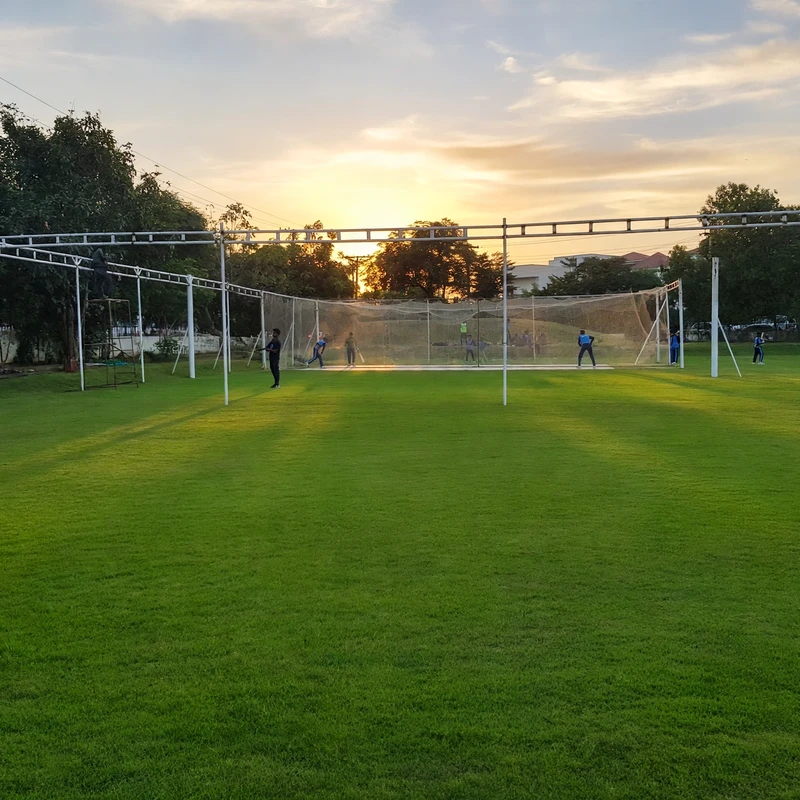
Why Grass Fails in a Cricket Run-Up
Two forces act on the ground at the same time:
- Spike abrasion: bowlers’ spikes shred the grass blades and tear the plant crowns at the surface.
- Soil compaction: repeated heavy footfall presses the soil underneath until it is almost as hard as concrete.
Once the soil is compacted, air and water cannot reach the roots. The grass suffocates, and what is left is bare dirt that turns to slick mud after watering or rain. Reseeding alone does not solve this, because the cause is in the soil structure. Unless the ground beneath changes, new grass fails the same way within weeks.
The Project: A Seven-Pitch Academy Facility in Valencia Town
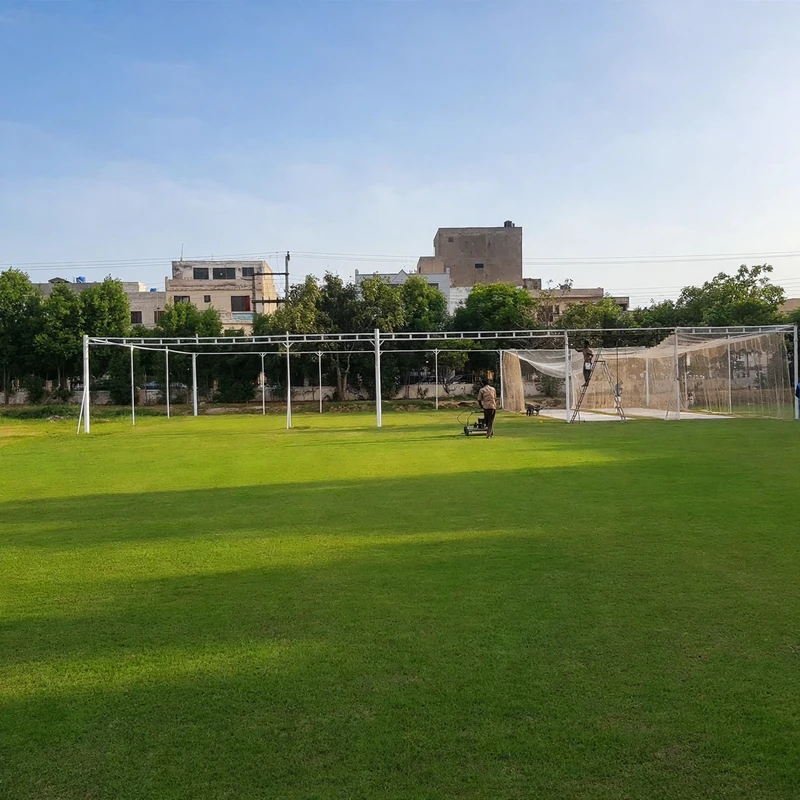
The Valencia Town facility combines natural turf practice pitches, synthetic turf pitches on a cement base and a steel net structure. The brief included a 30 ft run-up area behind the stumps in each net lane, built to survive daily fast-bowling practice and still look like the rest of the lawn.
Our Cricket Run-Up Construction Method
Instead of letting bowlers land on soft native soil, we build a structural, free-draining foundation under the grass:
| Component | Specification |
|---|---|
| Treated zone | 30 ft run-up zone in each net lane, measured back from the bowling stumps |
| Edge restraint | Concrete curb along the lane to confine the stone sub-base |
| Stone base | Clean, graded crushed stone, compacted for drainage and load-bearing strength |
| Reinforcement | Steel reinforcement grid placed over the stone so the aggregate cannot shift under impact |
| Growing layer | Sand-based rootzone, established with the same grass as the outfield |
| Landing zone | Compacted pitch clay behind the bowling stumps, level with the pitch slab |
Step 1: Excavate and edge with a concrete curb
The run-up lane is excavated beside the pitch strips and bordered with a concrete curb. The curb locks the foundation in place and stops stone from spreading into the turf.
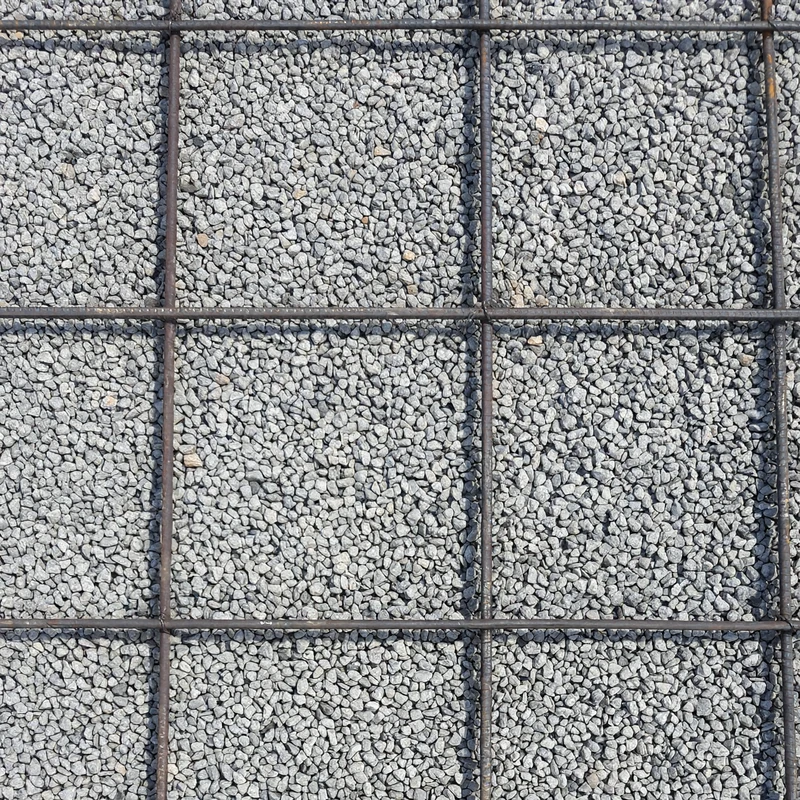
Step 2: Lay and compact graded crushed stone
Clean crushed stone gives drainage and strength. Unlike soil, it cannot pack into a waterproof layer, so water drains through instead of pooling at the bowler’s landing spot.
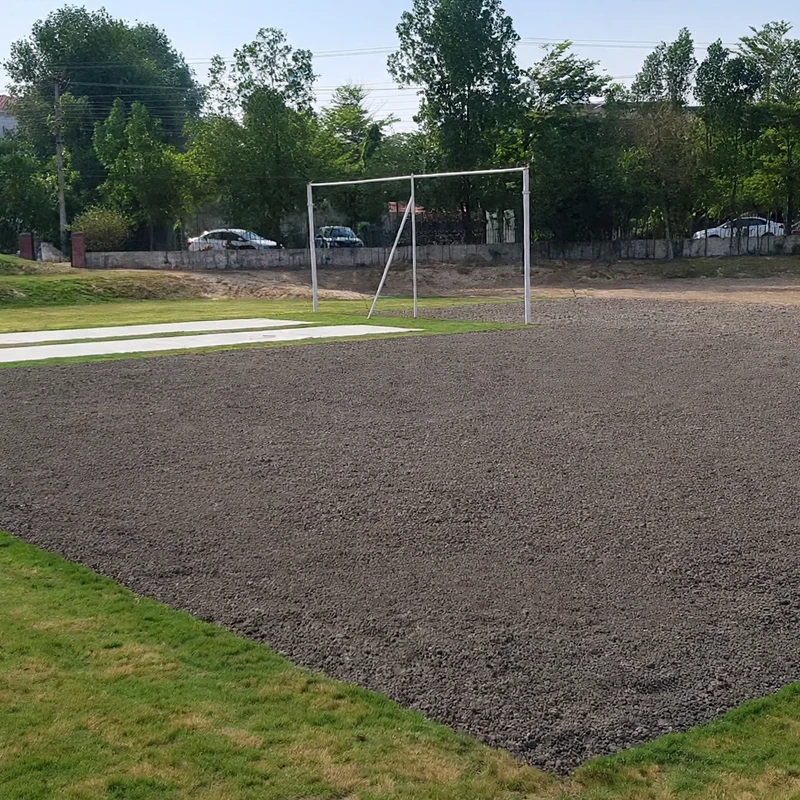
Step 3: Place the steel reinforcement grid
A steel grid over the stone holds the aggregate in position, so heavy fast-bowling strides do not displace the base over time.
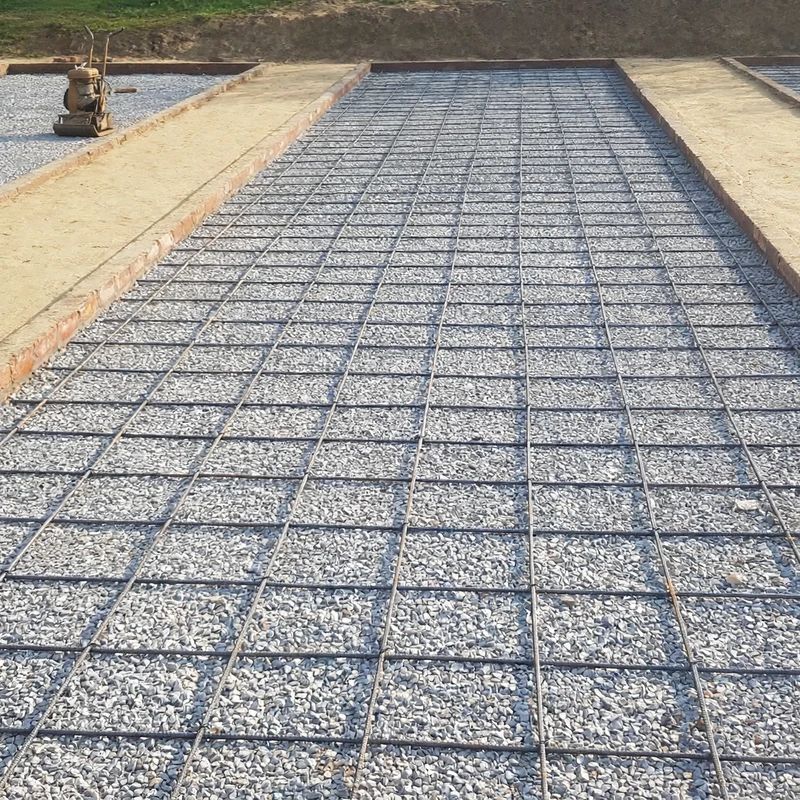
Step 4: Add the sand-based rootzone and establish turf
A sand-based growing layer goes on top, and the same grass as the outfield is established. Sand cannot be squeezed flat, so air and water keep reaching the roots. Because the surface is real grass, mowing stripes run continuously across the outfield and the run-up.
Why the Pitch Clay Landing Zone Matters
The hardest impact in a delivery stride is the front foot landing beside the stumps. We extend compacted pitch clay a few feet behind the bowling stumps and level it with the main pitch slab. The final landing then falls on firm clay and not on lawn turf, which protects the grass exactly where it would otherwise fail first.
Slope and Drainage
Water has to leave the surface. In this layout the run-up area is graded with a fall of about 3 inches, and the natural turf pitches with about 2 inches per pitch, so rain moves off the playing area and does not collect where bowlers land.
Other Run-Up Solutions We Offer
The stone sub-base with clay landing zone is our most durable option. Depending on traffic and budget, there are two lighter alternatives:
- Hybrid grass reinforcement mesh: a honeycomb-shaped synthetic mesh is laid over prepared soil and covered with a thin layer of sandy soil. Natural grass grows up through the openings, and the mesh protects the crowns so spikes cannot rip out the roots.
- Sand and compost rootzone: for lighter-use grounds, excavate 4 to 6 inches of heavy soil along the run-up lanes and refill with 80% coarse river sand and 20% compost. The mix stays porous, so oxygen and moisture keep reaching the roots.
Run-Up Maintenance Tips for Ground Staff
- Rotate the stumps: shift the bowling stumps about one foot left, centre and right every few sessions, so each strip of turf gets roughly two weeks to recover.
- Aerate and overseed monthly: aerate to about 3 inches with a spiked fork or rolling aerator, brush fine sand into the holes and overseed thin spots. Ryegrass is the usual winter choice, when summer grass goes dormant.
- Use the right machines: a pitch roller keeps the surface level, and regular mowing with well-kept cylinder mowers (see our grass cutting machine maintenance guide) keeps the turf dense.
Frequently Asked Questions
Can a cricket run-up be built with real grass?
Yes. The stone sub-base, steel grid and sand rootzone sit underneath, so the surface is natural grass that matches the outfield and keeps its mowing stripes.
How long is the run-up area you build?
At the Valencia Town facility the treated run-up zone is 30 ft in each net lane, measured back from the bowling stumps. We adjust the length to the site and the needs of your bowlers.
Can you repair an existing run-up that keeps failing?
Yes. We can rebuild the failing zone with a stone base, steel grid and sand layer, or use a lighter option such as reinforcement mesh. Send us photographs and the ground size, and we will recommend the right scope.
Upgrade Your Cricket Facility with Liberal Lawn Mowers
Whether you are building new practice nets or rehabilitating worn-out turf, Liberal Lawn Mowers has been supplying cricket ground equipment and turf expertise from Lahore since 1950. See also our guide to cricket sight screens in Pakistan.
Request a site assessment and quotation:
Phone / WhatsApp: 0324-4253430 | 042-36362453
Email: info@liberallawnmowers.com.pk
Address: 22 Queens Road, Lahore